The scale of what just happened
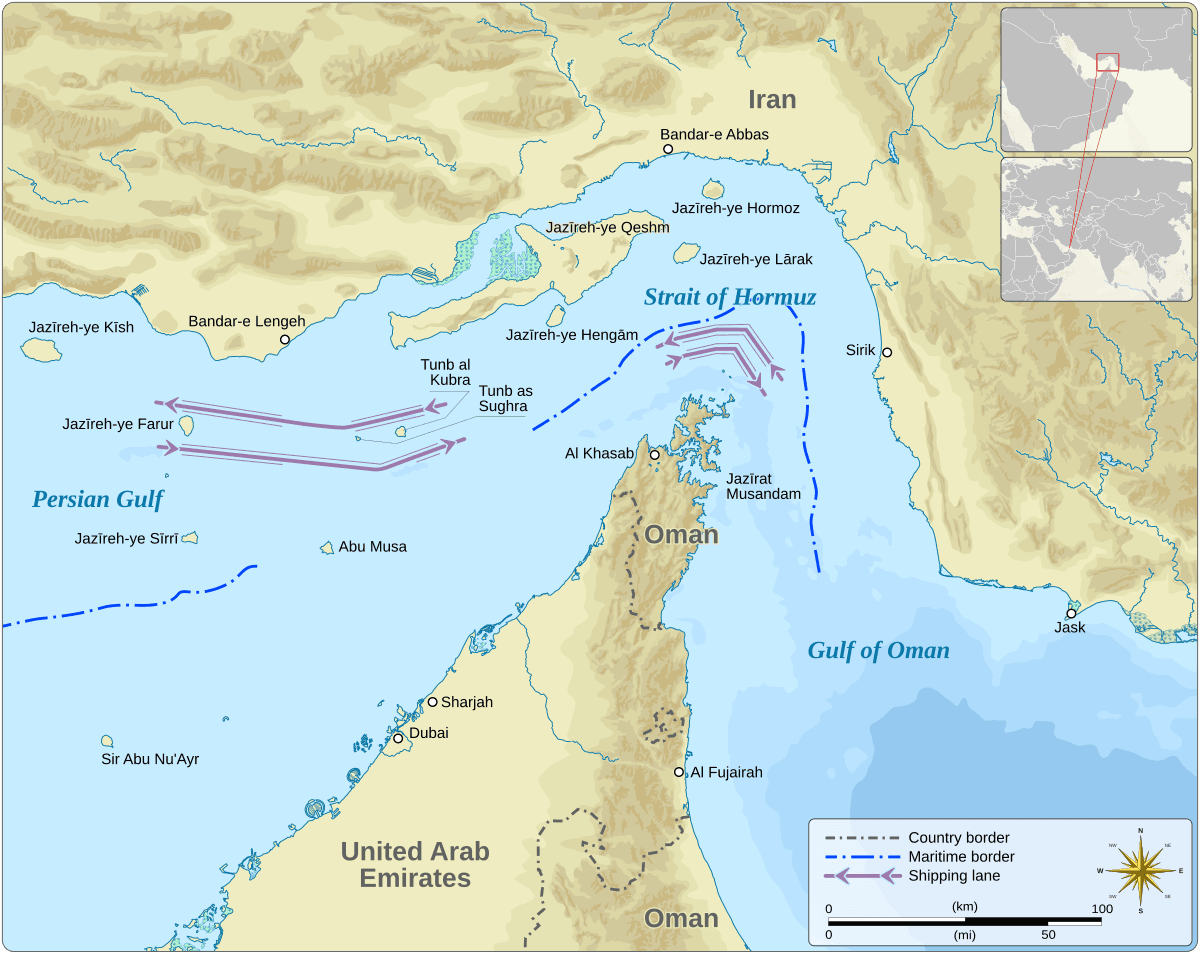
On February 28, 2026, US and Israeli forces launched coordinated strikes on Iran. Within 48 hours, maritime traffic through the Strait of Hormuz dropped by over 70%. Within a week, every major container shipping line — Maersk, CMA CGM, MSC, Hapag-Lloyd — had suspended transits. The Strait was, for the first time in modern history, effectively closed.
This is not a Red Sea situation. The Red Sea disruptions of 2024 were serious but had a workaround: the Cape of Good Hope. The Hormuz closure is categorically different — it is the only exit from the Persian Gulf. There is no alternative maritime route. Every barrel of oil, every container, every LNG tanker that moves from the Gulf must pass through a 21-mile-wide passage between Iran and Oman. And right now, that passage is shut.
To put this in historical context: the 1973 oil embargo removed 4.5 million barrels per day from global supply — roughly 6% of the market. The current disruption threatens 20 million barrels per day, or approximately 20% of global supply. This is the Dallas Fed's assessment: the Hormuz closure is three to five times larger than any previous geopolitical oil disruption in modern history.
“This is the largest disruption to the energy supply since the 1970s oil crises — and the largest in the history of the global oil market.”
The freight rate cascade
Oil price shocks matter to supply chain leaders not just because of energy costs — they matter because of what they do to freight rates. And what's happening to freight rates right now is extraordinary.
Spot container rates on major routes have risen approximately 150% since February 28. Asia-to-US West Coast rates, which were running at $1,800–$2,200 per 40-foot container before the crisis, have surged above $4,500. The Shanghai Containerized Freight Index has reached levels not seen since the peak of the COVID-era supply chain crisis in late 2021. Asia-to-Europe routes have moved even more sharply.
The mechanism is straightforward but the speed is not. There are three simultaneous forces pushing freight costs higher:
Interactive Data
The chart below shows all three layers — oil price, freight rate, and retail import cost index — from 2019 to today. The event lines on panel 3 are shifted 8 weeks right to show when each shock actually arrives in retail costs. Hover for exact values.
Sources: EIA (Brent crude) · Freightos/SCFI (freight rates) · BLS Import Price Index · Lotus Advisory analysis
The downstream cascade: what hits your business and when
Supply chain disruptions don't arrive all at once. They cascade in waves — and the timing matters enormously for how you respond. Here's what the data shows about how the Hormuz shock travels through different supply chain layers:
Who gets hit hardest— and who doesn't
Not all businesses are equally exposed. The impact depends on three variables: your sourcing geography, your product category's reliance on petrochemical inputs, and how much inventory buffer you're currently carrying.
| Sector | Primary Exposure | Timeline | Impact |
|---|---|---|---|
| Apparel / Fashion | Synthetic fabrics rely on petrochemicals from Gulf. Asian garment industry directly exposed. | 4–10 weeks | HIGH |
| CPG / Packaged Goods | Packaging materials (polyethylene from Middle East — 85% of exports go through Hormuz). Input cost inflation. | 6–12 weeks | HIGH |
| E-Commerce Retail | High Asia-origin freight exposure. Inventory turns already under pressure. Rate increases hit COGS directly. | 4–8 weeks | HIGH |
| Food / Agriculture | Fertilizer disruption (urea up 32% already). Crop input costs rising heading into Northern Hemisphere planting season. | 3–6 months | MEDIUM-HIGH |
| Electronics / Hardware | Pacific routes less directly affected by Hormuz. Some aluminum and component exposure. | 6–12 weeks | MEDIUM |
| US-Domestic Mfg | US shale producers somewhat insulated from direct oil supply shock. Higher input costs arriving via global price transmission. | 2–4 months | LOWER |
What mid-market operators should do right now
This is the part of the analysis most people skip to — and it's where I'll be direct about what I'd do if I were running supply chain for a $100M–$2B retailer, e-commerce business, or CPG company right now.
The biggest mistake I've seen operators make in disruption cycles — from COVID to Red Sea — is waiting for clarity before acting. Clarity comes after the window. By the time the situation stabilizes, the companies that moved early have already locked in capacity, adjusted their inventory positions, and built the buffers that let them serve customers while competitors stockout. Here's the playbook:
The scenario that changes everything: duration
Everything above assumes a disruption that resolves within one or two quarters — the base case that most analysts are working with. But the Dallas Federal Reserve has modeled what happens if the disruption persists: a three-quarter closure could reduce global real GDP growth by 1.3 percentage points. Goldman Sachs and Barclays have both flagged the risk of sustained oil above $100/barrel becoming inflationary in ways that change central bank policy.
If you're building your contingency plans, build three scenarios: 30-day resolution (painful but manageable), 90-day resolution (significant inventory and cost restructuring required), and 6+ month closure (supplier diversification, nearshoring acceleration, and fundamental procurement strategy review). Most companies have plans for the first. Very few have thought through the third.
“When the shock is over, supply and demand will have hit a new equilibrium — and the companies that adjusted early are the ones that come out ahead.”
A note on inventory strategy specifically
I want to be direct about something I've seen in every major disruption cycle: the instinct to cut inventory when freight costs rise is almost always wrong. Freight cost increases are temporary. Stockouts during a disruption are permanent — that revenue doesn't come back, and that customer relationship is damaged.
The right move is the opposite: build inventory buffers on your highest-velocity, highest-margin SKUs now, while you still can at current prices, before the second and third waves of rate increases hit. Yes, your carrying costs go up. But carrying costs are recoverable. Lost sales are not.
The bottom line
The Strait of Hormuz closure is not a background risk. It is an active, ongoing disruption that is right now working its way through the global supply chain system — and the full impact for mid-market retailers, CPG companies, and e-commerce operators hasn't arrived yet. It's 2–5 weeks out for freight pressure, 6–12 weeks for input cost inflation, and 3–6 months for the full consumer price impact.
The companies that come out of this well will be the ones that mapped their exposure in the first two weeks, built appropriate buffers before the second wave of rate increases, locked in freight contracts while the window was still open, and updated their S&OP assumptions to reflect the new operational reality.
The companies that struggle will be the ones that waited for clarity — and found out in Q3 that their COGS had increased by 8–12% on affected SKUs, their in-transit inventory was three weeks late, and their competitors had already taken their shelf space.
This is a manageable disruption if you act in the next 30 days. It becomes an unmanageable one if you wait.

I’ve run supply chains through COVID, Red Sea, and now Hormuz. If you want to work through your specific exposure and response strategy, book a free 30-minute call. No pitch, just the analysis.
Book a Free Consultation →